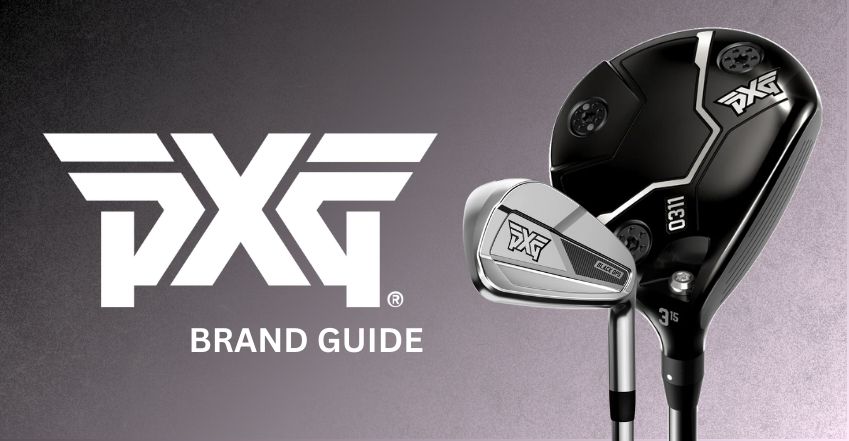
PXG: The Complete Brand Guide for Golfers (2026)
PXG is the golf brand that was never supposed to work. A startup launched in 2015 by a billionaire who thought the golf industry was doing it wrong, selling irons at $350 per club when the established brands charged half that. The industry laughed. Golfers were skeptical. A decade later, PXG is a full-line equipment company with a growing Tour presence, a direct-to-consumer model that’s brought prices down dramatically, and some of the most technically ambitious clubs on the market.
Love them or roll your eyes at them, PXG makes interesting golf equipment. And the 2026 lineup — headlined by the Gen8 irons and Lightning drivers — is their strongest yet.
We see PXG clubs regularly at Golf Club Brokers, and the resale story is evolving. Here’s everything you need to know.
TL;DR — Quick Answer
PXG is a Scottsdale-based, veteran-owned golf company founded in 2015 by billionaire Bob Parsons. The brand sells direct-to-consumer with a fitting-first model. The 2026 Gen8 irons feature a new Dual Perimeter Weighting System for unprecedented adjustability, 5X forged 8620 carbon steel construction, and QuantumCOR polymer. Lightning drivers are the current metalwood family. Pricing has come down significantly from launch — Gen8 irons start at $229 per club. The PXG for Heroes program offers major discounts to military, veterans, first responders, nurses, and teachers.
The Bob Parsons Origin Story
Bob Parsons is a Vietnam veteran, Purple Heart recipient, and the founder of GoDaddy. After selling GoDaddy, he turned his attention to golf — not as a hobby, but as a business problem to solve. His question was simple: what happens if you build golf clubs without compromising on materials, manufacturing, or R&D budget?
The answer was PXG — Parsons Xtreme Golf — launched in 2015 from Scottsdale, Arizona. The first product, the 0311 Gen1 irons, featured forged S25C carbon steel bodies, ultra-thin HT1770 maraging steel faces, TPE vibration-dampening polymer fill, and visible tungsten perimeter weights. They were objectively overbuilt. They were also $350 per iron.
The industry was skeptical. No startup had successfully entered the premium club market in decades. But Parsons had deep pockets, genuine passion for the product, and a willingness to spend years operating at a loss to build the brand.
It worked. PXG survived, iterated, and — critically — brought prices down. The $350-per-iron era is long gone.
| Year | Milestone |
|---|---|
| 2015 | PXG founded; 0311 Gen1 irons launch at $350/club — polarizing price point |
| 2016 | First PXG drivers; Gen2 irons; Tour staff begins to form |
| 2018 | Gen3 irons; PXG for Heroes program launches for military/first responders |
| 2020 | Gen4 irons; pricing begins to come down; DTC model expands |
| 2022 | Gen5 irons; 0311 driver lineup matures; apparel line grows under Renee Parsons |
| 2023 | Gen6 irons; PXG for Heroes expands to nurses and teachers |
| 2024 | Gen7 irons; Black Ops driver family; 10th anniversary approaches |
| 2025 | Lightning metalwoods family launches; apparel and lifestyle expand globally |
| 2026 | Gen8 irons with Dual Perimeter Weighting; Aldrich Potgieter + Marco Penge signed; Hot Rod ZT putter |
Who Owns PXG?
PXG is privately owned by Bob Parsons and his wife Renee Parsons, who serves as president and leads the apparel division. There are no outside investors, no parent corporation, no shareholder pressure. That’s important — it means PXG can make decisions based on product quality rather than quarterly earnings.
The company is headquartered in Scottsdale, Arizona with retail stores and fitting studios across the US. They also operate mobile fitting units that travel to golf courses and events. The Bob & Renee Parsons Foundation has donated more than $145 million to organizations supporting US military veterans and their families.
PXG is a veteran-owned company, and that identity runs deep. It’s not a marketing angle — it’s foundational to the brand culture.
The 2026 Iron Lineup: Gen8
The 0311 Gen8 irons are PXG’s most technically ambitious irons yet. Three models — the 0311 P (players), 0311 XP (extreme performance / players distance), and 0311 T (tour) — share a common technology platform with different shaping and loft progressions.
| Model | Category | Construction | Best For |
|---|---|---|---|
| 0311 T | Tour / Players | 5X forged 8620; compact blade; Dual Perimeter Weighting | Low handicaps; shot shapers; feel-first players |
| 0311 P | Players | 5X forged 8620; mid-size; QuantumCOR polymer | Mid-low handicaps; most golfers who want performance + forgiveness |
| 0311 XP | Players Distance | 5X forged 8620; larger head; max ball speed | Mid-high handicaps; distance seekers; max forgiveness |
The big story is the Dual Perimeter Weighting System. Each Gen8 iron has two adjustable weights — one in the heel, one in the toe — that let fitters shift the center of gravity left or right. More than one in three golfers who go through a PXG fitting end up with a heel or toe bias rather than balanced weighting. That’s a meaningful number, and it suggests most standard irons are leaving performance on the table for a large percentage of golfers.
Other tech: QuantumCOR is PXG’s proprietary polymer that pushes COR to the legal limit while managing sound and feel. Deep Core Recoil Technology helps energy transfer at impact. Ultra-thin maraging steel faces. Each iron is five-times forged from 8620 carbon steel with robotic polishing.
Chrome irons go for $229 per club; Xtreme Dark finish is $249. That’s a far cry from the $350 launch era — and genuinely competitive with Titleist, TaylorMade, and Callaway pricing.
Lightning Drivers, Fairway Woods, and Hybrids
The Lightning metalwood family — launched late 2025 — is PXG’s current driver lineup. Four driver models cover different swing profiles. The naming is straightforward: Lightning (standard), Lightning LS (low spin), Lightning Max (forgiveness), and Lightning Ultra Lite (slow swing speed optimization).
PXG drivers have improved dramatically over the last few generations. The early PXG drivers were genuinely not competitive with the Big Four. That’s changed. The Lightning family is a legitimate option, particularly for golfers who value the fitting-first approach — PXG’s adjustability options in drivers are extensive.
Fairway woods and hybrids share the Lightning platform. Pricing starts at $649 for drivers.
Wedges and Putters
PXG’s 0311 Forged wedges are milled from 8620 carbon steel with precision CNC milling and progressive CG. They’re solid performers that don’t get enough attention outside the PXG ecosystem.
The putter lineup has expanded significantly. The Tour Series Brandon and Brandon II are milled blade putters, while the new Fat Brandon offers a wider body for more forgiveness. The Allan ZT Long Putter and Hot Rod ZT (launched February 2026) add zero-torque options — a smart move given the category’s growth.
The DTC Model: How PXG Sells
PXG sells direct-to-consumer. You won’t find Gen8 irons at Golf Galaxy or PGA Tour Superstore. You buy from PXG.com, at PXG retail stores, or through PXG fitting studios.
The fitting-first approach is central to the brand. PXG strongly encourages — essentially expects — customers to get fit before buying. They operate retail stores and fitting studios across the country, plus mobile fitting units. The fitting experience is generally well-regarded.
The DTC model has pros and cons. On the plus side, PXG controls the entire experience and can offer competitive pricing by cutting out retail middlemen. On the minus side, you can’t easily demo PXG clubs at a neutral fitting location (Club Champion, True Spec, etc.), and the resale market can be complicated by the DTC pricing structure.
PXG for Heroes: The Discount Program
This is one of PXG’s most compelling differentiators. The PXG for Heroes program offers significant discounts to active-duty military, veterans, police officers, firefighters, EMTs, nurses, and teachers. The discounts are substantial — typically in the range of meaningful percentage reductions on equipment and apparel.
PXG doesn’t publicly list the exact discount percentage (it varies by product and promotion), but the savings are real and well-documented by participants. If you’re eligible, it’s worth checking — it can make PXG equipment significantly more accessible.
Beyond the discount program, PXG and the Bob & Renee Parsons Foundation have donated more than $145 million to veteran-supporting organizations, including a long-running annual match campaign with Semper Fi & America’s Fund.
What We See on the Used Market
PXG’s used market dynamics are different from the Big Four brands. A few things to know.
Depreciation is steeper. PXG clubs tend to lose value faster than Titleist, Callaway, or TaylorMade. The DTC model means there’s no retail floor price to anchor resale values, and PXG’s frequent generation cycles (Gen5 through Gen8 in four years) push older models down quickly. For buyers, that’s great news — Gen6 and Gen7 irons are excellent clubs available at steep discounts.
Gen7 irons are the sweet spot right now. With Gen8 just launching, Gen7 irons are flooding the used market. They’re outstanding clubs — same 5X forged construction, same QuantumCOR polymer — without the Dual Perimeter Weighting. If adjustable heel-toe weighting isn’t a priority, Gen7 used is an excellent buy.
Driver and wood values drop fast. PXG metalwoods haven’t built the resale cachet of TaylorMade or Callaway. Previous-generation PXG drivers can be found at remarkable discounts — often 50–60% off within a year.
The perimeter weights are a unique consideration. PXG’s signature visible weights are small and can come loose. When buying used, check that all weights are present and secure. Missing weights affect both performance and resale value.
Tour Players
PXG’s Tour presence has grown steadily. The 2026 roster includes Aldrich Potgieter (2025 PGA Tour Rookie of the Year), Marco Penge, Megan Khang (LPGA), and Olivia Cowan. The brand also has ambassadors including Gary Player.
The Tour roster is young and growing but doesn’t yet include the household names that Titleist or TaylorMade boast. That’s partly by design — PXG’s marketing has always leaned more on the founder’s personality and the brand lifestyle than on Tour star power.
Is PXG Right for You?
Best for: Golfers who value fitting and adjustability above all else. The Dual Perimeter Weighting in Gen8 is genuinely unique, and PXG’s fitting infrastructure is excellent. Also strong for Heroes-eligible golfers (military, first responders, nurses, teachers) where the discount program makes premium equipment significantly more affordable.
Consider alternatives if: You want clubs you can easily demo at neutral fitters, if resale value matters to you, or if you prefer buying through traditional retail channels. PXG’s DTC model is convenient once you’re in the ecosystem but can feel limiting if you like to comparison-shop in person.
Our take: PXG makes genuinely good golf clubs — better than the early reputation suggested. The Gen8 irons are competitive with anything from the Big Four. The pricing has normalized to reasonable levels. And the PXG for Heroes program is one of the most generous discount programs in the industry. The brand still has a personality-driven, love-it-or-hate-it energy. But if you set that aside and evaluate the equipment objectively, it deserves serious consideration.
Frequently Asked Questions
Is PXG worth the money?
In 2026, yes — the pricing has come down to be competitive with Titleist, TaylorMade, and Callaway. Gen8 irons at $229 per club are in line with other premium brands. The quality of materials and construction is genuinely high. If you’re Heroes-eligible, the value equation is even stronger.
Can I buy PXG at a golf store?
No. PXG sells exclusively direct-to-consumer through PXG.com, PXG retail stores, and PXG fitting studios. You won’t find current PXG models at Golf Galaxy, PGA Tour Superstore, or independent retailers. Used PXG clubs are available through third-party resellers like Golf Club Brokers.
What is PXG for Heroes?
PXG’s discount program for active-duty military, veterans, police officers, firefighters, EMTs, nurses, and teachers. The discounts are substantial and apply to equipment and apparel. Eligibility is verified through the PXG website.
Do PXG clubs hold their resale value?
PXG clubs depreciate faster than the Big Four brands. The DTC model and rapid generation cycles push used prices down quickly. For buyers, that’s a benefit — Gen6 and Gen7 models are available at steep discounts. For sellers, expect lower returns than comparable Titleist or TaylorMade trade-ins.
What makes Gen8 irons different?
The Dual Perimeter Weighting System — two adjustable weights in the heel and toe that let fitters shift the CG left or right. More than one in three fitted golfers end up with a non-balanced weighting. Also features QuantumCOR polymer, Deep Core Recoil Technology, and 5X forged 8620 carbon steel.
Who founded PXG?
Bob Parsons — a Vietnam veteran, Purple Heart recipient, and billionaire entrepreneur who founded GoDaddy. He started PXG in 2015 in Scottsdale, Arizona. His wife Renee Parsons serves as president and leads the apparel division.
Explore PXG on the Used Market
Golf Club Brokers carries used PXG irons, drivers, and putters from multiple generations. Every club is inspected and graded. Gen6 and Gen7 models are particularly strong values right now.