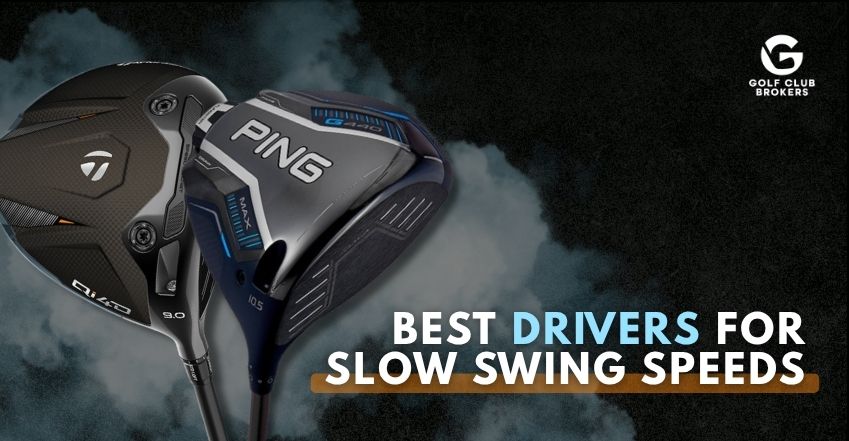
Best Drivers for Slow Swing Speeds (2026 Guide)
Let's get the uncomfortable truth out of the way: if your driver swing speed is under 90 mph, most drivers on the wall at your local golf shop aren't optimized for you. They're built for the 95–105 mph golfer. The shaft is too heavy. The loft is too low. And the total weight makes it harder for you to generate the clubhead speed you need to get the ball in the air.
That's not a criticism — it's physics. Every mile per hour of swing speed is worth approximately 2.8 yards off the tee. So a 10 mph difference between you and the golfer the driver was designed for costs you nearly 30 yards before you even consider launch angle and spin. The right driver, properly configured, can recover 10–20 of those yards. The wrong driver makes the problem worse.
We see this play out at Golf Club Brokers constantly. Golfers trade in drivers that were too heavy, too stiff, and too low-lofted for their swing. They replace them with something lighter, higher-launching, and better matched — and immediately hit it farther with less effort.
Here's what to look for, our top recommendations, and where the used market creates real value.
TL;DR — Quick Answer
For swing speeds under 90 mph, prioritize: lightweight total weight (under 300g), higher loft (10.5–12°+), lightweight graphite shaft (40–60g in senior or regular flex), high MOI for forgiveness, and draw bias if you fight a slice. Our top picks: TaylorMade Qi4D Max Lite (best overall lightweight), Ping G440 (best forgiveness), Cleveland Launcher XL2 (best value), XXIO 14 (best premium lightweight), and Callaway Elyte Max Fast (best Callaway option). On the used market, the Ping G430 MAX 10K and Callaway Paradym Ai Smoke Max Fast are outstanding at steep discounts.
What Makes a Driver Good for Slow Swing Speeds?
Not every feature matters equally. Here's what actually moves the needle, ranked by importance:
1. Total Weight (Most Important)
A lighter driver lets you swing faster without swinging harder. That sounds simple because it is. A 20-gram reduction in total weight can translate to 1–2 mph of additional clubhead speed — which means 3–6 extra yards. The best slow-speed drivers use lightweight shafts (40–60g graphite), lighter grips, and optimized head weights to bring total club weight well under 300g.
2. Loft
More loft means higher launch and more carry. Most golfers with swing speeds under 90 mph are playing too little loft. A 9° driver at 80 mph produces a low, penetrating flight that hits the ground before it should. Bump that to 10.5° or 12° and the ball launches higher, carries farther, and often increases total distance even though the launch is higher. If your swing speed is under 80 mph, seriously consider 12° or even a high-launch (HL) option.
3. Shaft Flex and Weight
This is where many slow-speed golfers go wrong. A stiff shaft at 65g is designed for 100+ mph swings. At 80 mph, that shaft doesn't load properly — the face stays open, the launch is low, and you slice. A senior flex (A-flex) or regular flex shaft in the 40–55g range allows slower swings to load the shaft properly, square the face, and launch the ball on the right trajectory.
Quick guide: under 75 mph → ladies or senior flex at 40–50g. 75–85 mph → senior flex at 45–55g. 85–95 mph → regular flex at 50–65g. These are starting points — getting fit confirms the right match.
4. MOI and Forgiveness
Slower swing speeds tend to produce more off-center contact. You need a driver with high MOI (moment of inertia) — resistance to twisting on mishits. The highest-MOI drivers maintain more ball speed and straighter flights when you miss the center. Look for “Max” or “10K” designations from most brands — those are the maximum-forgiveness models.
5. Draw Bias (If Applicable)
Slicing gets worse at lower swing speeds because the club face has more time to stay open. If your miss is right (for right-handed golfers), a draw-biased driver with internal weighting positioned in the heel can help close the face at impact. Not every slow-swinger slices, but for those who do, draw bias is a meaningful feature.
Our Top Picks for 2026
| Driver | Lofts | Stock Shaft | Key Feature | Used Mkt | Best For |
|---|---|---|---|---|---|
| TaylorMade Qi4D Max Lite | 9°, 10.5°, 12°, HL | REAX 40 (42–44g) | Ultra-light system | Too new | Best overall lightweight; 60x Carbon Twist Face in a light package |
| Ping G440 | 9°, 10.5°, 12° | Multiple lightweight options | Highest MOI, consistency king | Too new | Best forgiveness; fits widest range of slow-speed golfers |
| Cleveland Launcher XL2 | 9°, 10.5°, 12° | Aldila Ascent PL 40 (40g senior) | Best value; AI face | N/A | Best value in category; excellent for budget-conscious seniors |
| XXIO 14 | 9.5°, 10.5°, 11.5° | Ultra-light carbon (35–40g) | Lightest driver available; Weight Plus tech | XXIO 13 available used | Premium lightweight; golfers under 85 mph who want the absolute lightest option |
| Callaway Elyte Max Fast | 9°, 10.5°, 12° | Lightweight graphite | Ai 10x Face; ultra-light total weight | Paradym Ai Smoke Max Fast on used mkt | Callaway loyalists who want the latest AI face tech in a light build |
| Titleist GT1 | 10°, 12° | Fujikura Air Speeder | Titleist quality in a lightweight build | TSR1 available used | Titleist fans who need lightweight without sacrificing premium feel |
| Cobra Air-X 2 | 9°, 10.5°, 12° | Cobra Ultralight (50g) | Lightest Cobra ever; excellent value | Air-X (Gen 1) available used | Budget-friendly lightweight; great for first-time lightweight driver buyers |
The Used Market Advantage: Where Slow-Speed Golfers Save the Most
Here's the secret most slow-speed golfers don't realize: a used driver from one or two years ago, properly matched to your swing, will perform nearly identically to the brand-new model. Year-over-year distance gains in drivers are marginal — 2–3 yards under laboratory conditions. But the price difference between a new driver and a one-year-old used driver is often 40–50%.
Our recommended used-market picks for slow swing speeds:
- Ping G430 MAX 10K — MyGolfSpy's Most Wanted Driver for low swing speeds in independent testing. Highest MOI, exceptional forgiveness. Available used at a significant discount to the new G440.
- Callaway Paradym Ai Smoke Max Fast — Callaway's most recent lightweight driver, now approaching end-of-life pricing as the Elyte replaces it. AI-designed face, lightweight throughout. Outstanding value used.
- TaylorMade Qi35 Max Lite — TaylorMade's first real lightweight driver. 60x Carbon Twist Face platform. Available used as Qi4D Max Lite takes over.
- Titleist TSR1 — Titleist's dedicated slow-speed driver. Lightweight, high launch, deep CG. Now two generations behind the GT1, creating real value opportunities.
- Cleveland Launcher XL Lite — One of the lightest drivers ever made (12.5g lighter than standard XL). No adjustability but excellent out-of-the-box performance for seniors. Often available used under $150.
The key when buying used: make sure the shaft flex and weight match your swing. A used driver with the wrong shaft is a waste of money. If the head is right but the shaft isn't, budget $30–60 for reshafting.
The Mistake That Costs You the Most Distance
Playing a shaft that's too heavy and too stiff. We see it all the time.
A golfer with an 82 mph swing speed walks in with a driver that has a 65g stiff shaft. That shaft doesn't load properly at 82 mph. The clubface stays open. The ball launches low and right. The golfer blames their swing, when really, the equipment is fighting them.
Swapping to a 50g regular or senior flex shaft — without changing the head — can add 5–10 yards immediately. The shaft squares the face. The lighter weight adds swing speed. The proper flex increases launch. It's the single cheapest, most impactful equipment change a slow-speed golfer can make.
Golf Shaft Guide: How to Choose the Right Shaft for Your Swing
Adjustable Hosels Explained: How to Set Your Driver's Loft & Lie
Frequently Asked Questions
What swing speed counts as “slow”?
Generally under 85–90 mph with a driver. For reference, the average male amateur swings at about 93 mph, the average senior golfer in their 60s at about 80–85 mph, and PGA Tour average is around 115 mph. If you're under 90, you benefit from lightweight, high-launch driver configurations.
Should I use a senior flex shaft?
If your driver swing speed is under 85 mph, senior flex is likely the right starting point. Between 85–95 mph, regular flex is usually best. The flex determines how much the shaft bends during the downswing — too stiff prevents the shaft from loading and squaring the face; too soft can cause inconsistency. A fitting is the most reliable way to confirm.
Does higher loft really add distance at low swing speeds?
Yes — up to a point. At 80 mph, moving from 9° to 12° often adds carry distance because the ball launches higher and stays in the air longer. The optimal driver loft for most slow-speed golfers is 10.5–12°. Going above 13° rarely helps unless your swing speed is below 70 mph.
Are lightweight drivers less durable?
No. Lightweight drivers use the same materials (titanium, carbon fiber, steel) as standard-weight drivers. They're lighter because the shaft weighs less, the grip weighs less, and sometimes the head has redistributed weight. Durability is identical to standard models.
Can I just reshaft my current driver instead of buying new?
Absolutely. If you like your current driver head but it's paired with a too-heavy, too-stiff shaft, reshafting is the most cost-effective upgrade. A quality lightweight senior-flex graphite shaft costs $50–$150, plus $20–40 labor. That's a fraction of a new driver and can deliver similar performance gains.
What about adjustable hosel settings?
If your driver has an adjustable hosel, increasing the loft by 1–2° from the stock setting can help launch. Most adjustable drivers allow +/- 1.5–2° of loft adjustment. This is a free change that many slow-speed golfers overlook. Just loosen the screw, rotate the sleeve, and retighten.
Related Articles
- Golf Shaft Guide: How to Choose the Right Shaft for Your Swing
- Adjustable Hosels Explained: How to Set Your Driver's Loft & Lie
- How to Stop Slicing Your Driver: Equipment & Technique Fixes
- How to Build a Golf Bag on a Budget
- Best Irons for Mid-Handicappers (2026)
Shop Used Lightweight Drivers at Golf Club Brokers
We carry a wide selection of lightweight and senior-friendly drivers from every major brand — current and previous generations. Every driver is inspected for head condition, shaft integrity, grip wear, and adjustable hosel function. Whether you want the latest Qi4D Max Lite or a value-priced Ping G430 MAX 10K, we've got options that match your swing.